
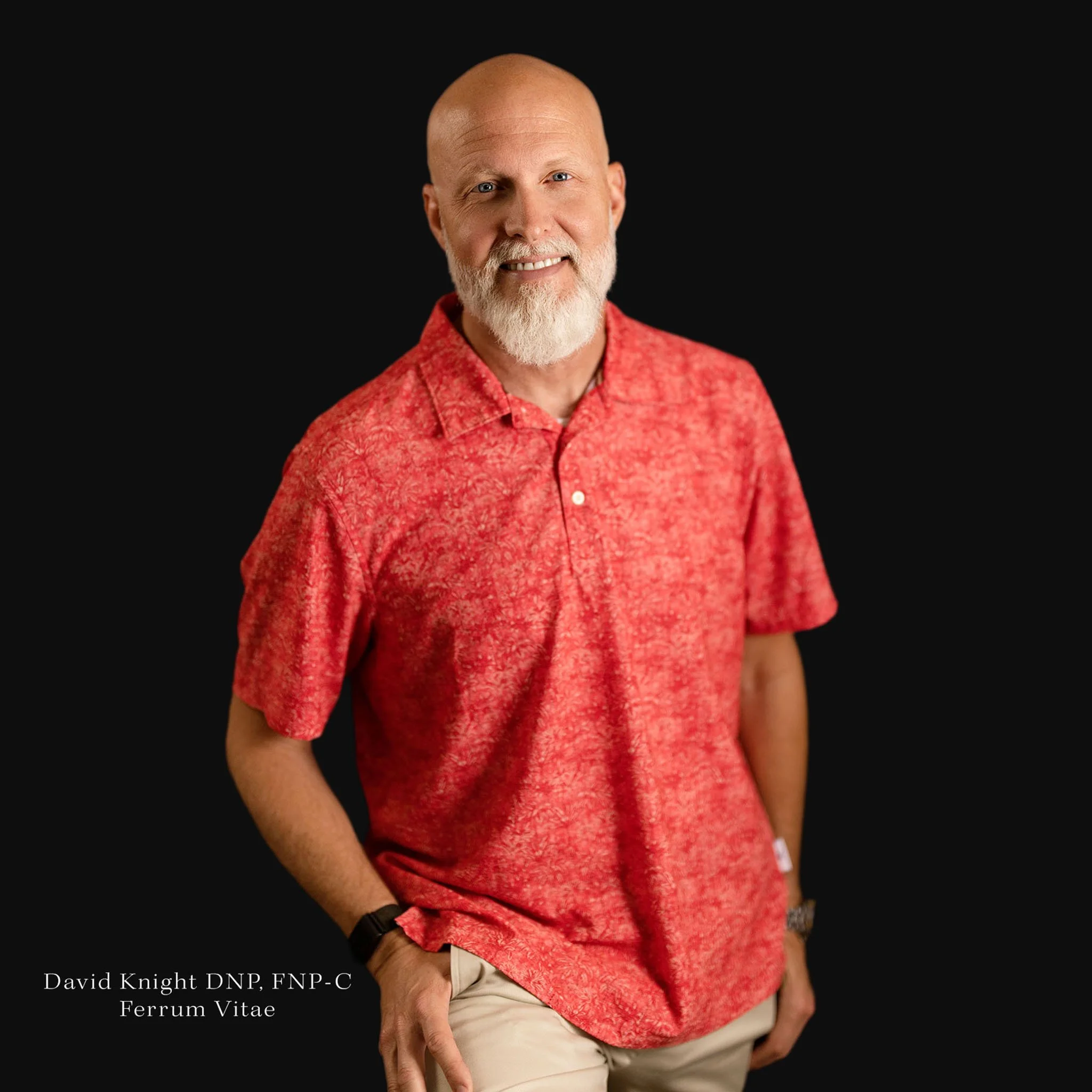
Meet David Knight

David Knight has worked in healthcare since 1998, beginning as a paramedic and continuing through nursing, critical care, and family practice. Today, he continues to see patients full-time in Wimberley, Texas, with a focus on integrative medicine and disease prevention.
His approach has been shaped by nearly three decades of seeing healthcare from several perspectives. He has treated patients during emergencies, cared for them through serious illness and surgery, and worked with people who still have time to change the direction of their health.
A Career Built Through Experience
David began his career as a licensed paramedic, caring for people during some of the most urgent and difficult moments of their lives. Emergency medicine taught him to make decisions with limited information, recognize what mattered most, and communicate clearly when patients and families were frightened.
After becoming a registered nurse, he worked across emergency, medical-surgical, intermediate care, intensive care, and outpatient surgery settings. Those years gave him a close view of what happens after chronic disease, injury, or an untreated problem becomes serious enough to require hospitalization.
As a family nurse practitioner, David has focused his entire advanced-practice career on integrative medicine and disease prevention. He continues to value medication, procedures, surgery, and specialist care when they are appropriate, but he believes healthcare should do more than respond after something has already gone wrong.
Education
David earned associate degrees in emergency medical services licensed paramedic and in nursing from Austin Community College. He later completed both his Bachelor of Science in Nursing and Master of Science in Nursing at The University of Texas at Arlington.
He earned his Doctor of Nursing Practice from Arkansas State University, with an emphasis in leadership. His education followed the same progression as his career, with each degree building on years of direct patient care and clinical experience.
Prevention Before Crisis
David believes a whole-food diet and a preventive lifestyle should be the first line of defense against disease whenever they can meaningfully affect the outcome. Food quality, physical activity, strength, sleep, alcohol, tobacco, metabolic health, and other daily factors deserve serious attention before they become background details in a medication-focused plan.
That does not mean every disease can be prevented or that every patient can avoid medication. Genetics, age, injury, environment, and circumstances all matter. It means addressing what can be changed while thoughtfully using medical treatment when needed.
This is the reasoning behind David’s belief that “zero pills is goal.” The phrase is not a command to reject medication or supplementation. It means that every prescription, vitamin, herb, hormone, or supplement should have a clear purpose, an appropriate dose, an expected benefit, and a reason to remain part of the plan. Necessary treatment is not failure, but a longer list is not automatically better healthcare.
Patients Should Understand Their Own Care
David believes patients should know what they are taking, why they are taking it, what benefit is expected, what risks or side effects deserve attention, and what reasonable alternatives are available. Informed consent should be part of ordinary healthcare decisions, not something reserved for surgery or major procedures.
His role is to explain what he sees, what the evidence supports, where uncertainty remains, and what he believes is the safest and most reasonable course. He will give an honest professional recommendation, even when it is not the answer someone hoped to hear, while respecting the patient’s right to make an informed decision.
Competition, Endurance, and Starting Again
Long before Iron Life Health, competition was already a significant part of David’s life. He is a four-time Ironman finisher, completing the 2.4-mile swim, 112-mile bicycle ride, and 26.2-mile run required in a full-distance Ironman.
He recently began training in jiu-jitsu, which puts him back in the position of being a beginner. That is part of what appeals to him. David enjoys competition, difficult goals, and the process of learning where his current limits are and then working to move them.
His athletic experience also affects the way he thinks about health. Fitness is not appearance alone. Strength, endurance, mobility, recovery, and the ability to continue doing meaningful things all matter, particularly as people grow older.
Faith, Family, and Stewardship
David is a husband, father, and grandfather. He is also a Christian whose faith shapes the way he thinks about service, honesty, responsibility, and stewardship.
He does not believe stewardship requires perfection or that illness is always the result of personal choices. He believes it means taking responsibility for what can be changed, being truthful about what cannot, and using the time, health, and abilities a person has as wisely as possible.


Why Iron Life Health
Iron Life Health is where David shares what he has learned from the ambulance, the emergency department, the ICU, surgery, family practice, endurance sports, and nearly three decades of working with patients.
The purpose is straightforward: to have honest conversations about nutrition, exercise, metabolic health, hormones, weight management, laboratory testing, supplements, medication, longevity, and disease prevention. David will explain what the evidence supports, where healthcare gets it right, where he believes it can do better, and where the answer remains uncertain.
There are no miracle cures here and no promise that one diet, medication, supplement, or program will work for everyone. The goal is practical information that helps people ask better questions, understand their options, and take a more active role in their own health.